So you want to get into voice acting.
This is a living page. I update it as the industry changes and as I learn stuff, so feel free to bookmark it and check back. Last updated: October 2026.
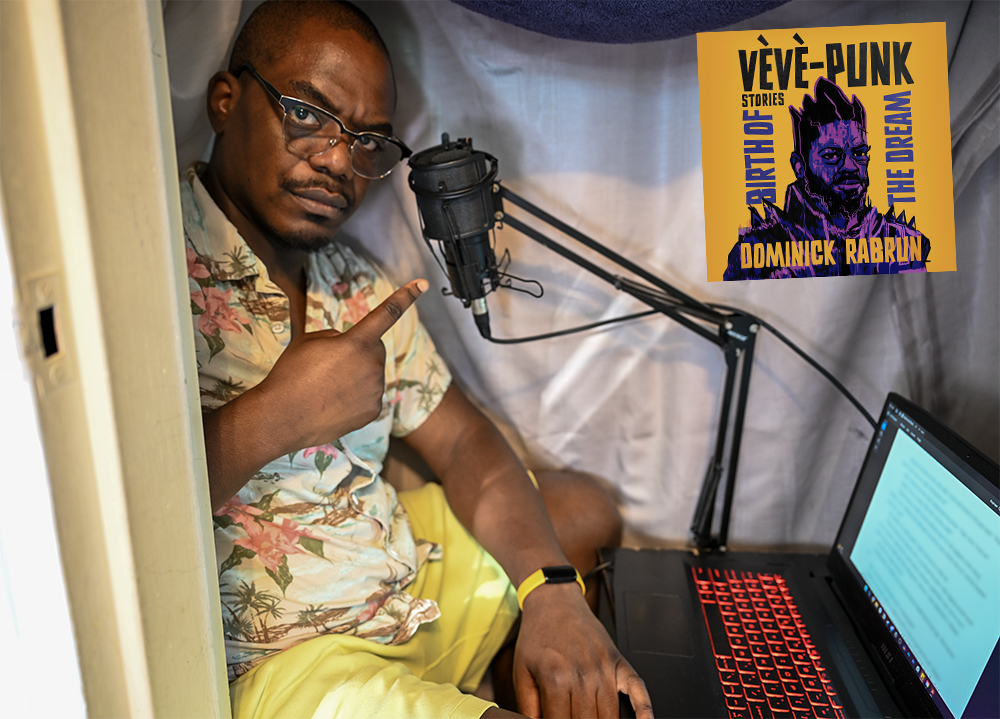
Me in “the booth” before I renovated it. It’s much nicer now, trust me. Also, that’s my audiobook.
In case you don’t know who I am, or what I have done in voice acting, check this link out to see my reel and my experiences.
Voice acting is a noble pursuit, and I think narration is on the cutting edge of storytelling. It’s only gonna get more popular. I made this page for a few reasons:
A lot more people are asking me for advice on “how to get started” or “do you think I have what it takes”. One of these is easier to answer than the other, and I’ll give you my general, honest thoughts on each of them here, for free, just like we’re sitting across from each other with our beverage of choice.
This page is going to be broken down into my general thoughts on what it takes to succeed in this line of work, answers to common questions I get, and I’ll give you a path to contact me if you have more questions as part of a consultation.
What It Takes To Succeed
If you want to get into voice acting because you think it’s going to be easy, I am going to tell you right now- it isn’t.
I’m gonna ask you to ask yourself three very direct, but hard rhetorical questions. Take a deep breath, and think about your answers. Be honest.
The technical side and the spiritual side of voice acting
I tend to think about voice acting the same way I think about visual art as a practice. There is a technical side, and a spiritual side.
The technical side is everything you can be taught, or improve with time and money. This is equipment, how your studio sounds, what computer you use, where you post your reel, what site you use, etc. Frankly, I’m not really excited by this side because the information is readily available through a google search or this forum on Reddit. For you RPG nerds, this is HP/STR/DEX. For you Veve-Punk lovers, this is Ogun/Legba/Ti Blag territory.
The spiritual side is what I find fascinating and more powerful. It is everything that can not be taught, but only learned through life experience, and living a full life of curiosity and passion and loving the craft itself. It’s reading widely on your own because you love words and language and knowledge. It’s listening to your voice. It’s feeling the range of how you sound. It’s embodying the text, and acting. It’s going places that scare you and showing your emotions. It’s the part of you that knows how a character sounds, and makes choices around that without being directed. It’s behaving as a conduit for the author’s desire, and living it. The spiritual side is what will make you unique, and will keep people interested in listening. For you RPG nerds, this is MP/INT/WIS. For you Veve-Punk lovers, this is Erzulie/Janet and Adam/Fabienne.
Get it? Okay, let’s continue:
Your Questions
I hate my voice/ I hate listening to my own voice/ I don’t like the sound of my own voice. Should I pursue this?
I would invite you to take the quiz above again. Be honest with yourself about why you want to do this. You will have to listen to your voice a lot, and however you feel about your voice, you will have to get over it and learn to love yourself and how you sound. If it helps, think about your voice as the voice of a friend, or someone you want to be kind to. If you can’t do that, this will be very hard for you, and worse- people will hear it in your performances and they may feel the same way you do.
What kind of equipment do you use?
I oscillate between my custom built PC (no I won’t tell you the specs), a sturdy gaming laptop, an Audio Technica AT2020 microphone, Focusrite USB pre-amp. I have a sound-treated closet that has gone through two iterations, but all you need to know about sound treatment can be found in these forums. I record using Audacity on Windows. It’s free.
Should I have a reel/website/samples on a website?
Yes. Invest in this if you’re serious. Get a website. Do it before you do anything else. If you can, get one on a good looking platform you own like Squarespace or Wordpress. If you can, pay a designer to make your site look good and make it easily navigable. This stuff matters, and people (casting directors and producers) will not tell you that your site is ugly. They’ll just move on.
A good voice reel edited by someone who knows what they’re doing and has experience will take you a long way. I got my reel done by the legendary Bill Kates. Reach out to him if you need help and let him know I sent you. He will work with your budget, and the result of what he creates with your voice will put you miles ahead of what you can do on your own or with the average audio editor.
How long does it take to record a book?
For every finished hour of audio, add about a half hour for your mistakes and even more time if you do your own editing. I don’t, and opt to hire a skilled editor to handle that for me.
Punch and Roll or Continuous take?
I do continuous takes and make clicks with my mouth so the editor knows to go back.
How much do you get paid?
Check out this Indie Rate Guide from Voice Acting Club, which I find to be fair and accurate. I prefer not to discuss my rates publicly, but if I consult with you I can give you a range of what my projects tend to pay.
Where do you find work?
I’m going to refer you to these forums, but the short answer is that ACX is a great place to start. Higher up, try submitting your voice to companies like Tantor or Podium or AHAB. You will need to do your research and e-mail a lot of people. Sometimes you’ll need to e-mail them multiple times. Be persistent and patient with this. Do not go into those spaces unless you’ve got your studio-quality audio setup, and at least a few high quality samples on your site.
Will you coach me/consult?
Yes, e-mail me here for rates and to schedule time. I’ll work with you in half-hour chunks, and it helps if you have a concrete idea of what you want help with and what a successful session would look like.
I have a question you didn’t answer.